
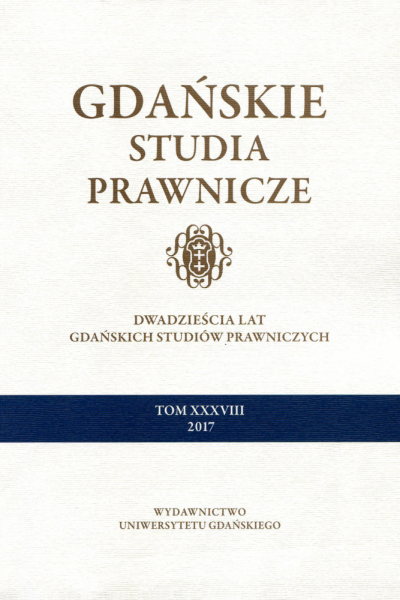
Nieświadomość bezprawności – historyczna perspektywa politycznokryminalna
Unconsciousness of Unlawfulness – Historical,
Political and Criminal Perspective
Author(s): Wojciech ZalewskiSubject(s): Law, Constitution, Jurisprudence, Criminal Law
Published by: Wydawnictwo Uniwersytetu Gdańskiego
Summary/Abstract: The knowledge of the applicable law is the sine qua non condition of the fight against crime. It is difficult to require compliance with regulations that are not known to their addressees. Obligation to obey the law is enshrined in the highest-level legal acts, including the Constitution of 1997. In criminal law, the error of law has long been a source of numerous interpretational doubts. The axis of dispute is set by the attitude to the results of ignorance of the law. Since the nineteenth century, in the face of the avalanche of legal provisions, the widespread knowledge of law has been considered a fiction. But has it been the reason for rejecting the principle of ignorantia iuris nocet? What practical, political and criminal consequences does it bring? Why is the error of law so rarely used in practice?The Author concludes that in understanding today’s disputes and in formulating de legeferenda proposals, it is helpful to know the origin of discrepancies. Thanks to looking at the past and critical thinking about the present, one can look to the future and try to propose a rational solution.
Journal: Gdańskie Studia Prawnicze
- Issue Year: 2017
- Issue No: XXXVIII
- Page Range: 717-736
- Page Count: 20
- Language: Polish
