
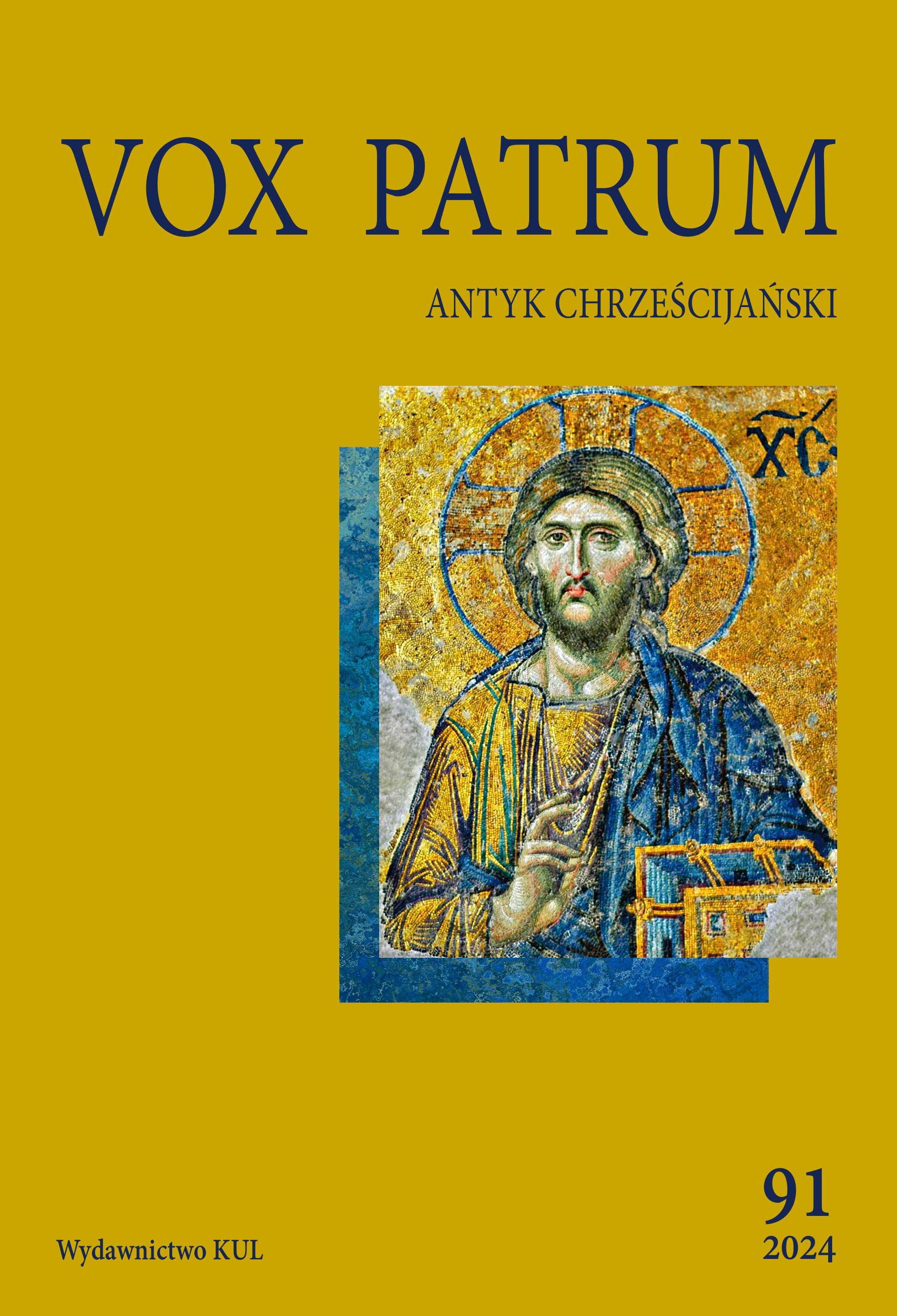
Cuda, jakich nikt inny uczynić nie zdoła, czyli jeszcze o weselu w Kanie Galilejskiej w literaturze greckiej i orientalnej
Miracles That No One Else Can Perform: Further Thoughts on the Wedding at Cana in Greek and Eastern Christian Literature
Author(s): Rafał ZarzecznySubject(s): Christian Theology and Religion, Studies of Literature, Theology and Religion
Published by: Katolicki Uniwersytet Lubelski Jana Pawła II
Keywords: Pseudo Chrysostom; Wedding at Cana of Galilee; Ethiopic Homily ; Oriental Literature
Summary/Abstract: Although the pericope about the Wedding at Cana (John 2:1‑11) did not garner significant interest in Late Antiquity, several commentaries and homilies on it have been preserved, particularly within the literature of the Christian East. This article examines various Greek texts from the second to the fifth centuries, including the writings of Irenaeus, Origen, John Chrysostom, Epiphanius of Salamis, and Cyril of Alexandria. Special attention is given to texts in Syriac, which often present a distinct perspective on biblical theology. Saint Ephrem (4th cent.) provided an extensive exegetical commentary rich in theological themes, while Jacob of Sarug (5th/6th cent.) offered a poetic homily. A homily by Benjamin I, the Patriarch of Alexandria in the seventh century, has been preserved in both Coptic dialect and Arabic translation; this work primarily serves as a treatise against heretics. Within Ethiopic literature, the Wedding at Cana is elaborated upon in the apocryphal Miracles of Jesus (14th cent.). In the Treasure of the Faith (16th cent.), the miracle is interpreted within a Christological framework, akin to the approach of Giyorgis of Saglā (14th/15th cent.) in the Book of the Mysteries, likely based on earlier sources. Additionally, an Ethiopic homily mistakenly attributed to John Chrysostom (CAe 2150; see CPG Sup. 5190.14), translated into Polish here for the first time, discusses the unity of divinity and humanity in Christ since the Incarnation, particularly in polemics against Nestorius, and contains significant eschatological and Marian themes, indicating its composition post-Ephesian crisis. The influence of Ephrem’s exegesis is also evident, possibly mediated through the works of Jacob of Sarug, whose homilies reached medieval Ethiopia via Arabic translations.
Journal: Vox Patrum
- Issue Year: 2024
- Issue No: 91
- Page Range: 723-768
- Page Count: 46
- Language: Polish
