
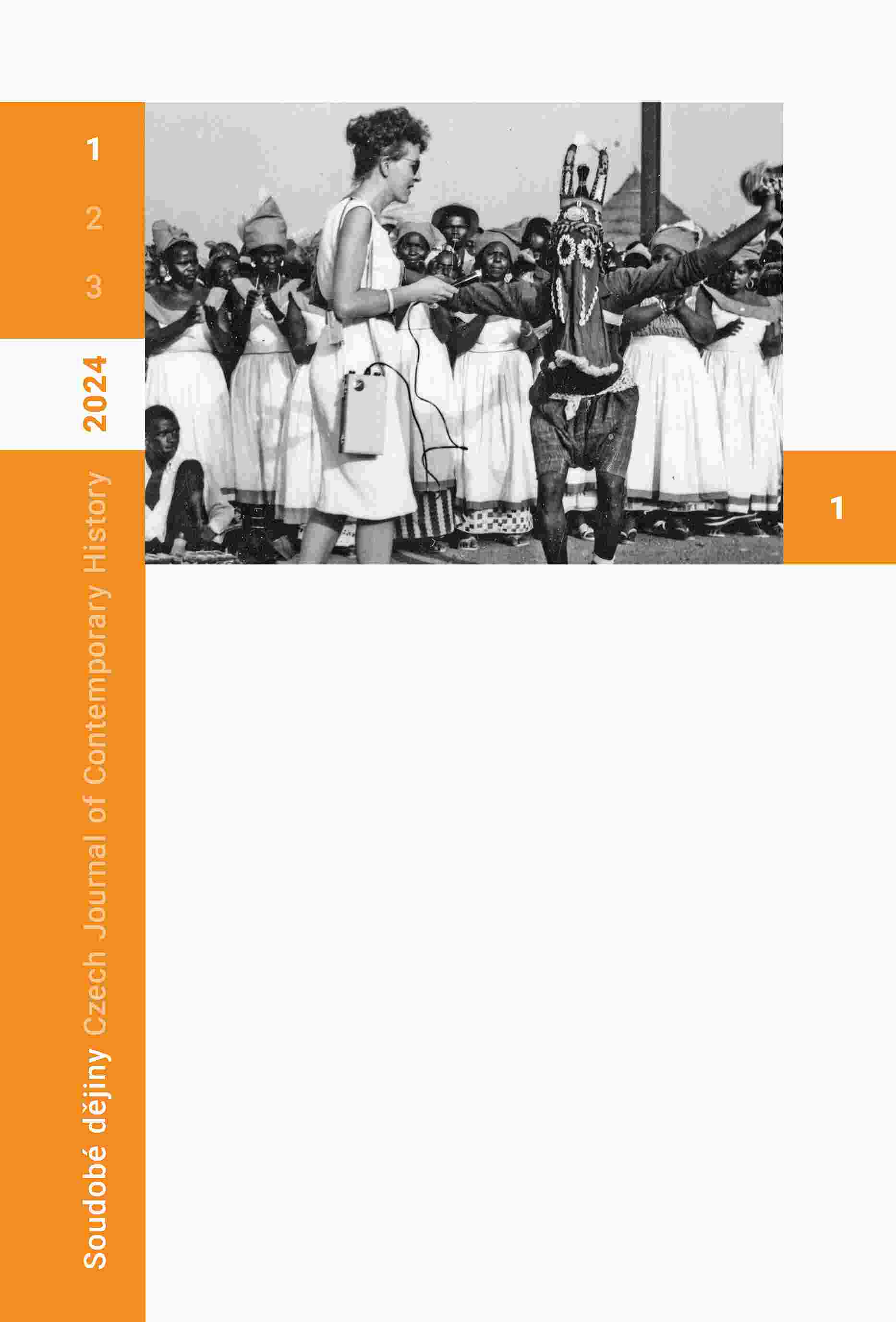
Věra Šťovíčková před mikrofonem:
Rozhlas, politika a československo-africké vztahy v letech 1958–1968
Věra Šťovíčková at the Microphone:
Radio, Politics and Czechoslovak-African Relations in 1958–1968
Author(s): Rosamund JohnstonSubject(s): History, Cultural history, Media studies, Political history, Gender history, Post-War period (1950 - 1989), History of Communism, Cold-War History
Published by: AV ČR - Akademie věd České republiky - Ústav pro soudobé dějiny
Keywords: Věra Šťovíčková;Czechoslovakia;Africa;Czechoslovak-African relations;Czechoslovak Radio;Journalism;Czechoslovak foreign correspondents;socialist internationalism;Prague Spring;Guinea;Biafra
Summary/Abstract: This study focuses on the journalist Věra Šťovíčková (later Heroldová-Šťovíčková, 1930–2015), who gained a considerable reputation and popularity as a foreign correspondent for Czechoslovak Radio in Africa between 1958 and 1968. She became involved in the Prague Spring reform movement and was forced to end her journalistic career after its suppression. She then made a living as a translator. After signing Charter 77, her translations were published under pseudonyms until 1990. The author focuses on Šťovíčková’s African years and, through her professional trajectory, explores several more general themes, such as the development of Czechoslovak-African relations, news coverage of the African continent, or the changing forms of socialist internationalism in Czechoslovakia in relation to the so-called Third World. The author also examines the balancing act between individual loyalty to and emancipation from official institutions in the era of President Antonín Novotný, the real or perceived contradictions between propaganda and professional competence in contemporary journalism, and, last but not least, the gendered limits to the exercise of a demanding profession in the Czechoslovakia of the time. As a woman doing such work, Šťovíčková theoretically personified the gender equality that Czechoslovakia, as an established socialist country, had supposedly already achieved and was now “exporting”. In practice, however, she differed fundamentally from her male colleagues both in her initial struggle for recognition and in the forms of (non)family life without the usual service background. The author argues that Šťovíčková cannot be considered a straightforward “propaganda bearer” but, rather, an active participant in the dynamic social negotiation of what constitutes “professional” journalism: she herself understood her role as analogous to the work of Czechoslovak experts sent to newly independent African countries, and related her attempts to influence state policy in Africa by internally and publicly criticizing Czechoslovak arms supplies to both warring parties in Biafra, Nigeria. She also used the depiction of the excesses of African political development as a mirror to indirectly criticize domestic conditions. The author shows that Šťovíčková was able to connect with her listeners through her texts and to make them empathize with her, which – as shown by fan letters, radio polls and the memories of her colleagues – brought her popularity and recognition among a large part of the (not only) radio public, long before her dramatic broadcast from the radio building besieged by Soviet tanks in August 1968, thanks to which she is still remembered today.
Journal: Soudobé Dějiny
- Issue Year: XXXI/2024
- Issue No: 1
- Page Range: 138-165
- Page Count: 28
- Language: Czech
