
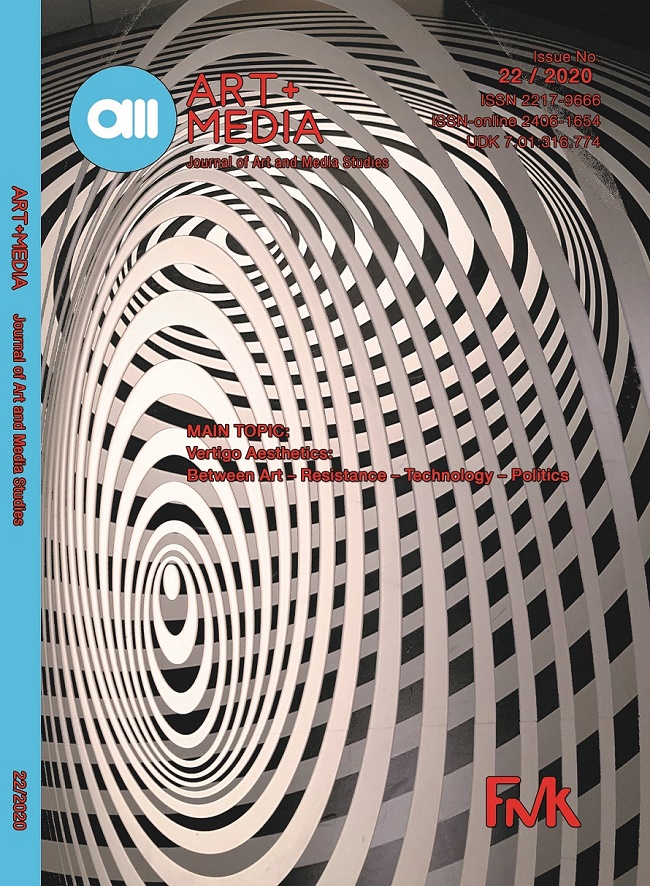
Aesthetics in Identity Politics: Cumulative Aesthetics, Emplotment, and Empathy
Aesthetics in Identity Politics: Cumulative Aesthetics, Emplotment, and Empathy
Author(s): Kathleen HigginsSubject(s): Aesthetics, Political Philosophy
Published by: Fakultet za medije i komunikacije - Univerzitet Singidunum
Keywords: cumulative aesthetics; empathy; emplotment; identity politics; “Me Too” movement; Zhuangzi.
Summary/Abstract: Contemporary identity politics, politics based on affiliation with a particular societal group in contradistinction from one or more others, typically becomes galvanized in response to a sense that those so affiliated have been marginalized or harmed. Art and aesthetic gestures utilized in contexts of identity politics serve a number of roles, among them drawing attention to the marginalization or harm to specific groups, consolidating those who share a particular political identity, and promoting empathy for members of such groups’ members. Another aesthetic strategy frequently utilized in efforts to promote social justice toward particular groups is the use of cumulative aesthetics, in which the amassing of instances is used to achieve an impact.Because so often aimed at rectifying arrangements that are perceived as unjust, groups that advocate on behalf of those who share their political identity tend to be energized in reaction to circumstances. There is a danger of their becoming too simplistic in their own perceptions, dividing the world into friends and enemies. The “Me Too” movement in the United States is taken as an example of a well-intended campaign that can encourage oversimplified analyses that potentially damage its effectiveness in achieving its own ends. This is particularly ironic because simplistic binaries are often at work in what causes marginalization or harm to such groups in the first place.Aesthetics can be utilized to inflame binary oppositions. It can also complicate perspectives in ways that lead to a lessening of reactive political responses and greater rapport across the boundaries separating one group from another. This can happen, for example, when art heightens perception but resists the danger of reinforcing preestablished binaries. Such art has the potential to assist efforts toward social justice by enabling greater sensitivity toward members of groups one does not consider one’s “own”. The Zhuangzi is taken as an example of a work that might do this, despite the apolitical concerns of its author.
Journal: AM Časopis za studije umetnosti i medija
- Issue Year: 2020
- Issue No: 22
- Page Range: 99-107
- Page Count: 9
- Language: English
