
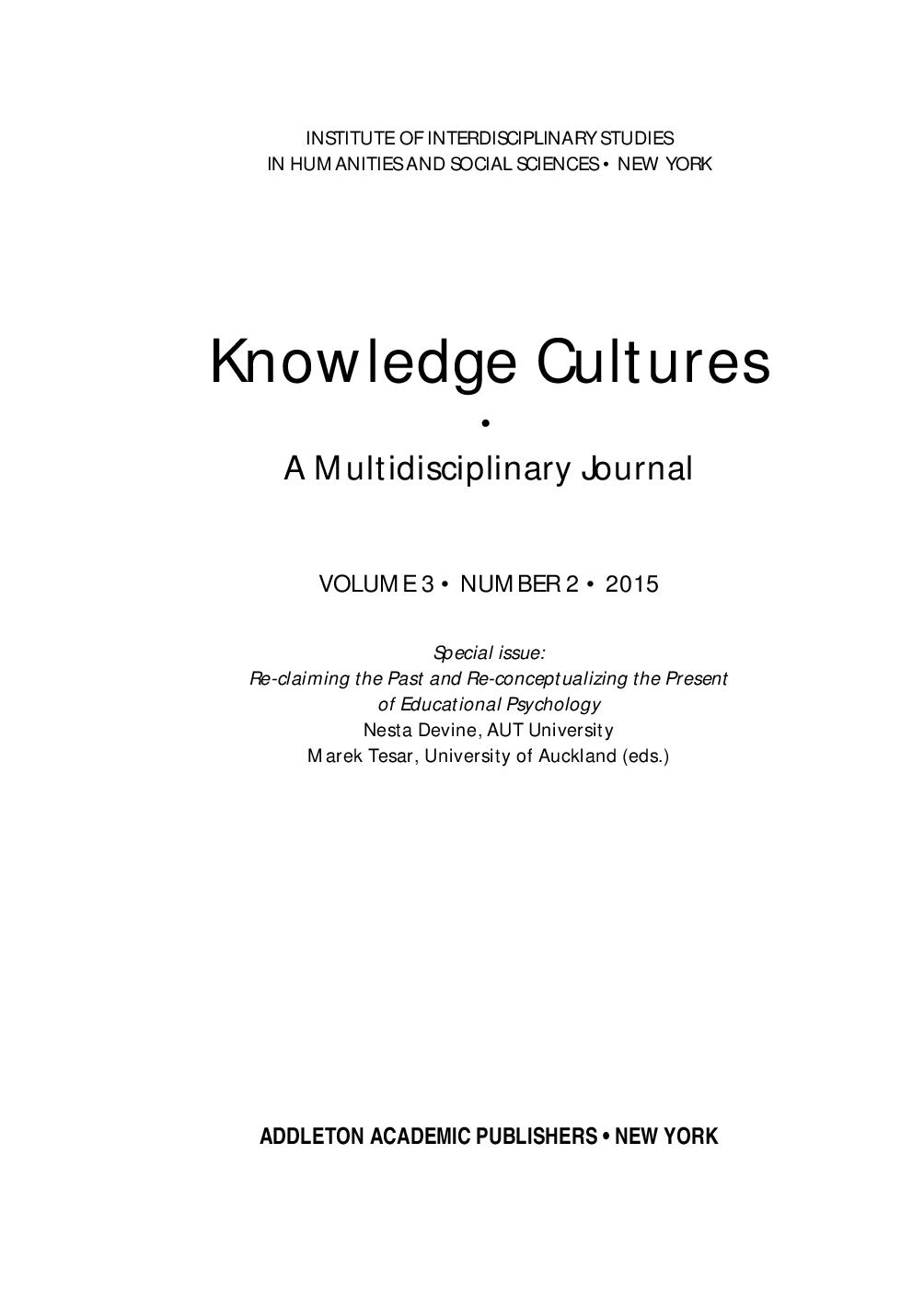
THE ETHICS OF EDUCATION FOR/OF GIFTED CHILDREN: THE CENTRAL EUROPEAN PERSPECTIVE
THE ETHICS OF EDUCATION FOR/OF GIFTED CHILDREN: THE CENTRAL EUROPEAN PERSPECTIVE
Author(s): Vladimir DockalSubject(s): Ethics / Practical Philosophy, Preschool education, School education
Published by: Addleton Academic Publishers
Keywords: gifted children; Central Europe; ethical dilemma; education;
Summary/Abstract: Giftedness in Central Europe is understood as a highly positive human characteristic, and its appraisal in individual cases is very sensitive. Identification of a child’s giftedness has an impact not only on the child, but also on the whole family. At the same time, a child’s giftedness is perceived as a social value. This premise raises a number of concerns. Does individualized care for gifted children increase and deepen social divides? And, what are the potential consequences for a child and family if the child is not included in a gifted education program? Often the definition of giftedness is derived from the characteristics of a gifted child. Constructed in this way, the concept of giftedness becomes a classification, and creates a divide between people with the identified talent(s), and people without them. This paper, attempts to raise a number of concerns and ethical dilemmas on the education of gifted children in Central Europe.
Journal: Knowledge Cultures
- Issue Year: 3/2015
- Issue No: 02
- Page Range: 146-154
- Page Count: 9
- Language: English
- Content File-PDF
