
ქართული მოდერნიზმი როგორც ოქციდენტოცენტრიზმი
(ქართული ლიტერატურული მოდერნიზმის სოციოკულტურული,
ესთეტიკური და პოეტოლოგიური კონტექსტები)
European and National Context of Georgian Modernist Literature
Author(s): Konstantine BregadzeSubject(s): Literary Texts
Published by: ლიტერატურის ინსტიტუტის გამომცემლობა
Keywords: European modernism; Georgian modernism; Georgian culture.
Summary/Abstract: In Georgia as well as in Europe, the establishment of Literary Modernism, and generally orientation on modernist views and aesthetics, was not a spontaneous and unconscious phenomenon, but a sort of following the fashion. For Georgian Modernist writers’operating with Modernist aesthetics, Modernist themes, problematic and poetical principles was neither the subject of temporary interest (“Youth Disease”, “Naïve Fascination”)nor an object of coquetry (“Diseased by a Foreign Illness”). Modernist aesthetics and Modernist Views for Georgian Writers was a source of connecting Georgian Literature with that of Western Literature. They saw Modernism as a means of leaving the tyranny of Russian and Asian Culture and therefore integrate with Western Culture again. Accordingly,the Georgian literary modernism, as well as the European literary modernism, the establishment and development had its fundamental social-political and socio-cultural preconditions, as well as aesthetic-theoretical and philosophical basis (Nietzsche, Schopenhauer,Wagner, Freud, Bergson, etc.).The socio-cultural preconditions of Georgian Modernism single out two chief aspects: Modernism, as a viewpoint and literary discourse, Georgian Modernists, on the one hand connected with the issue of renewal of Georgian Culture, which implied the approach of Georgian and Western Culture and make Georgian Culture an in separable part of the western one, an on the other hand, saw it as a means of re-establishing Georgian state an orientation towards the West both politically and culturally;The intensive reception and establishment of Modernist viewpoints and Aesthetics is connected with the intensified political life of the 1920s – the catastrophe of 1921, the political terror and repressions of the 20s, the suppression of the rebellion of 1924, the anti religious terror and propaganda of the Bolsheviks. Also, it is connected with the intensified technical-mechanic ideologist progress of the 20s which was executed by the Bolsheviks under the Messianic Pathos.Based on the processes outlined above Georgia also saw the “Metaphysical Shake”(Nietzsche) – God is dead, the values were re-evaluated and Georgian Culture was supressed by the Materialist Understanding of the Bolsheviks and the mechanic-technic civilization.This lead to the de-sacralisation, de-humanisation of Georgian being, alienation from mythic-sacred initial, accordingly, leading to the dissolution of subjectivity, existential fear and the impossibility of self-identification. All this created the main thematic and problems of Georgian Literature.It can be said that the Georgian literary modernism is a unique phenomenon in the European literature and it is not a simple plug or peripheral area of European modernism.On the contrary, the original Georgian Modernism expands European modernism:Georgian Modernism on the one hand uses original artistic paradigms, mythological archetypes,and mythical narrative, uses purely national communities and tries to make it universal, creating new Mythic-artistic reality, a bringing in new cultural and landscapes paces and communities based on the import of new and unique artistic and literary creation,and on the other hand tries to make European literary modernism more diverse,enrich it and become an integral and organic part of it. It should be noted that this peculiarity of Georgian literary modernism and its connection with European literary modernism was first outlined by Stefan Zweig in the preface of the first German edition of Grigol Robakidze`s “Snake Skin” (1928).Ultimately in Georgian literary modernism three major characteristics should be out lined, making it fundamentally different from European modernism and that determines its specificity:Strong anti-colonial discourse;Modernism is understood not only as a purely aesthetic phenomenon, which should aid in the renewal of Georgian literature, but also as a precondition to improve Georgian socio-cultural life; The Specifics of the imagery in Georgian Literary Modernism, especially in Prose and Drama, and which can be seen in the extensive usage of mythological and mythical archetypes, which aimed at the de-humanization of the modernist epoch and to overcome the issues of re-sacralization (Utopian) based on the “mythic-sacral’’ literary texts.According to other approach, by the Cognition of reality, subjectivity and language crisis;Criticism of technical civilization;The need of re-sacralization of existence Georgian Literary Modernism is tightly connected with the main paradigms of European Literary Modernism.
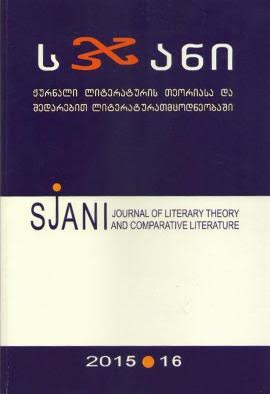
Journal: სჯანი
- Issue Year: 2015
- Issue No: 16
- Page Range: 56-72
- Page Count: 16
- Language: Georgian
