
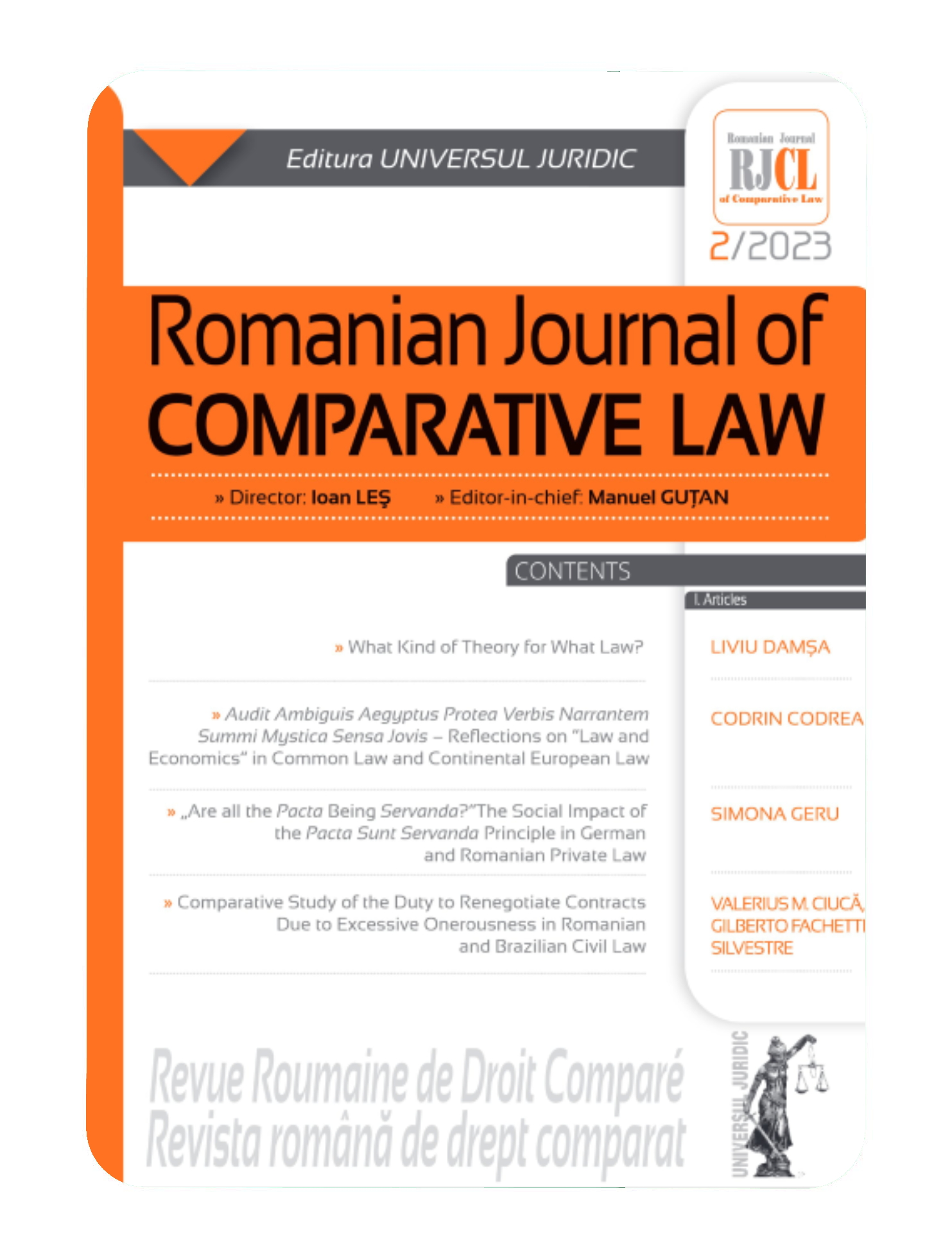
The Posthumous Mandate – Between Legislative Innovation and Legal Acculturation
The Posthumous Mandate – Between Legislative Innovation and Legal Acculturation
Author(s): Oana Cristina MunteanuSubject(s): Law, Constitution, Jurisprudence, Civil Law, International Law
Published by: Universul Juridic
Keywords: mandate; succession administration; posthumous effect; trust; mortis causa mandate; fiduciary;
Summary/Abstract: The law of 23 June 2006 on the reform of legacies and liberalities represented a long-awaited and indispensable legislative modernisation for the French law of succession. Theoreticians, especially legal practitioners, unanimously accepted the necessity of reconfiguring these institutions. Alongside the ingenious transgenerational donation-share institution (donation-partage transgénérationnelle), the posthumous mandate was another piece of resistance in the modern legal landscape, what French law has once again brought the merit of being considered the legislative compass of the European continental law family. In the wake of such a perspective, the growing tendency of the French legislator to create various legal levers to ensure an economically safe and secure climate, in particular through protection against chance, in the event of the death of a person whose role in a business was vital, may be noticed. This mandate introduces into French law one of the aspects of the trust organised by the British jurisdiction of Equity and the successional trust known in Swiss and German law. However, it is not a reflection of them. As we shall notice during this article, the posthumously effective mandate deprives heirs of seisin and their powers of administration and management of the property in question for the period for which it was given and, therefore, confers limited and temporary control over the inheritance of a person who is not an owner, from this perspective being in antagonism to the general principles of French succession law. This article outlines the characteristics and functioning of the posthumous mandate as imagined in the French Civil Code. It identifies possible points of convergence with similar institutions in other neighbouring legal systems to identify prospects for implementing de lege ferenda in Romanian law.
Journal: Revista Română de Drept Comparat
- Issue Year: 2023
- Issue No: 02
- Page Range: 285-303
- Page Count: 19
- Language: English
- Content File-PDF
