
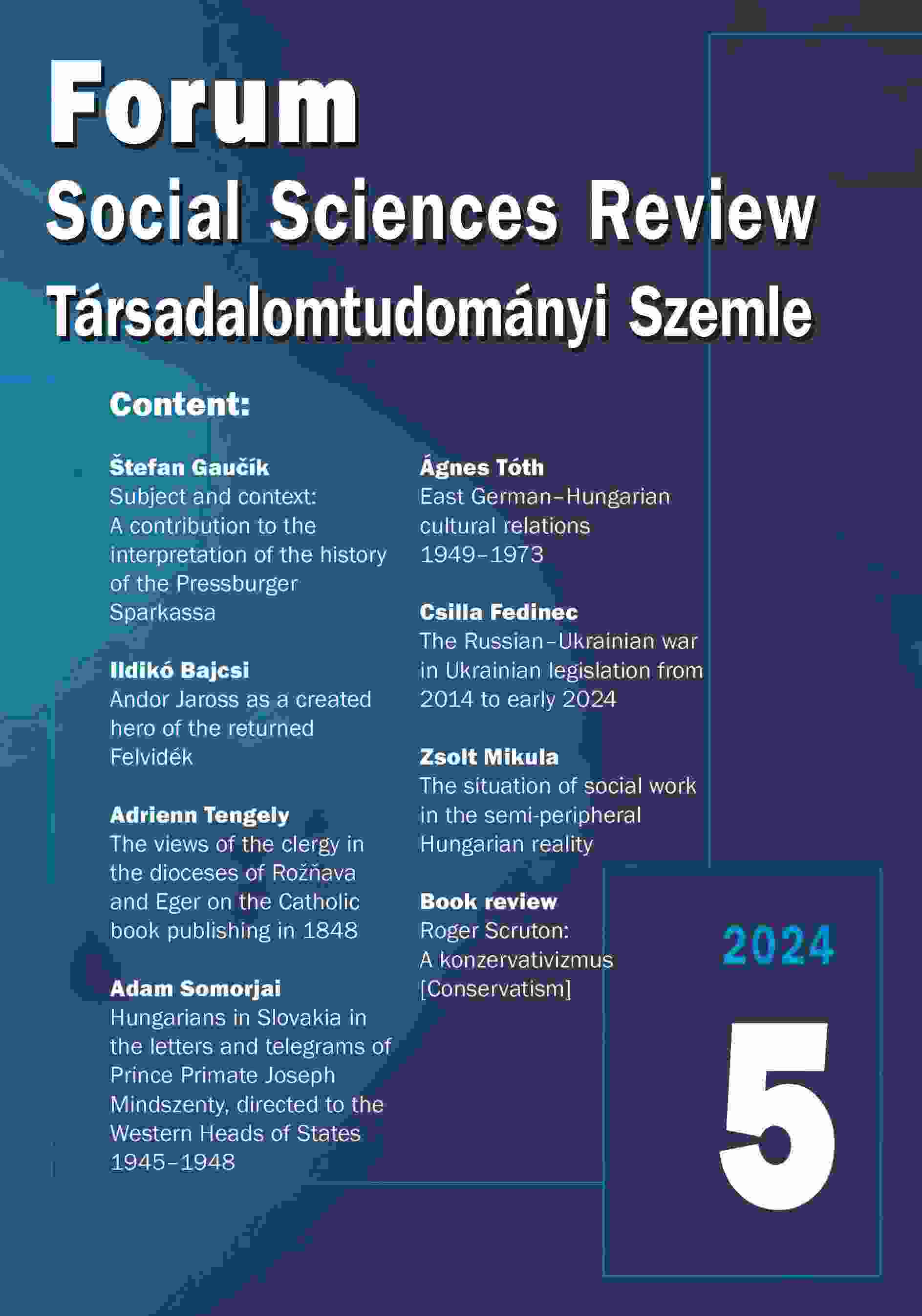
The situation of social work in the semi-peripheral Hungarian reality
The situation of social work in the semi-peripheral Hungarian reality
Author(s): Zsolt MikulaSubject(s): Family and social welfare, Sociology of Culture
Published by: Fórum Kisebbségkutató Intézet
Keywords: social work; word system theory; welfare; economic policy; workfare; social values
Summary/Abstract: This research investigates the contemporary state of social work in Hungary by examining the evolution of interest relationships within the socio-economic-political value system, shaped by both national and global economic policies. Utilizing Immanuel Wallerstein's world-systems theory, which categorizes nations into core, semi-peripheral, and peripheral groups based on their economic and political influence, this study analyzes the effects of Hungary's historical and economic development on its social work sector. As a semi-peripheral country, Hungary has encountered substantial social and economic challenges following its transition from socialism. The study underscores the implications of global economic trends and the dependency of semi-peripheral and peripheral countries on core nations. Although the unrestricted flow of capital and technology benefits core countries and multinational corporations, it exacerbates inequalities in less developed nations. Hungary's post-socialist transformation has led to the erosion of the middle class and heightened social inequalities, further aggravated by a shift towards a workfare society that prioritizes economic growth over social welfare.
Journal: Fórum Társadalomtudományi Szemle
- Issue Year: XXVI/2024
- Issue No: 5
- Page Range: 121-136
- Page Count: 16
- Language: English
