
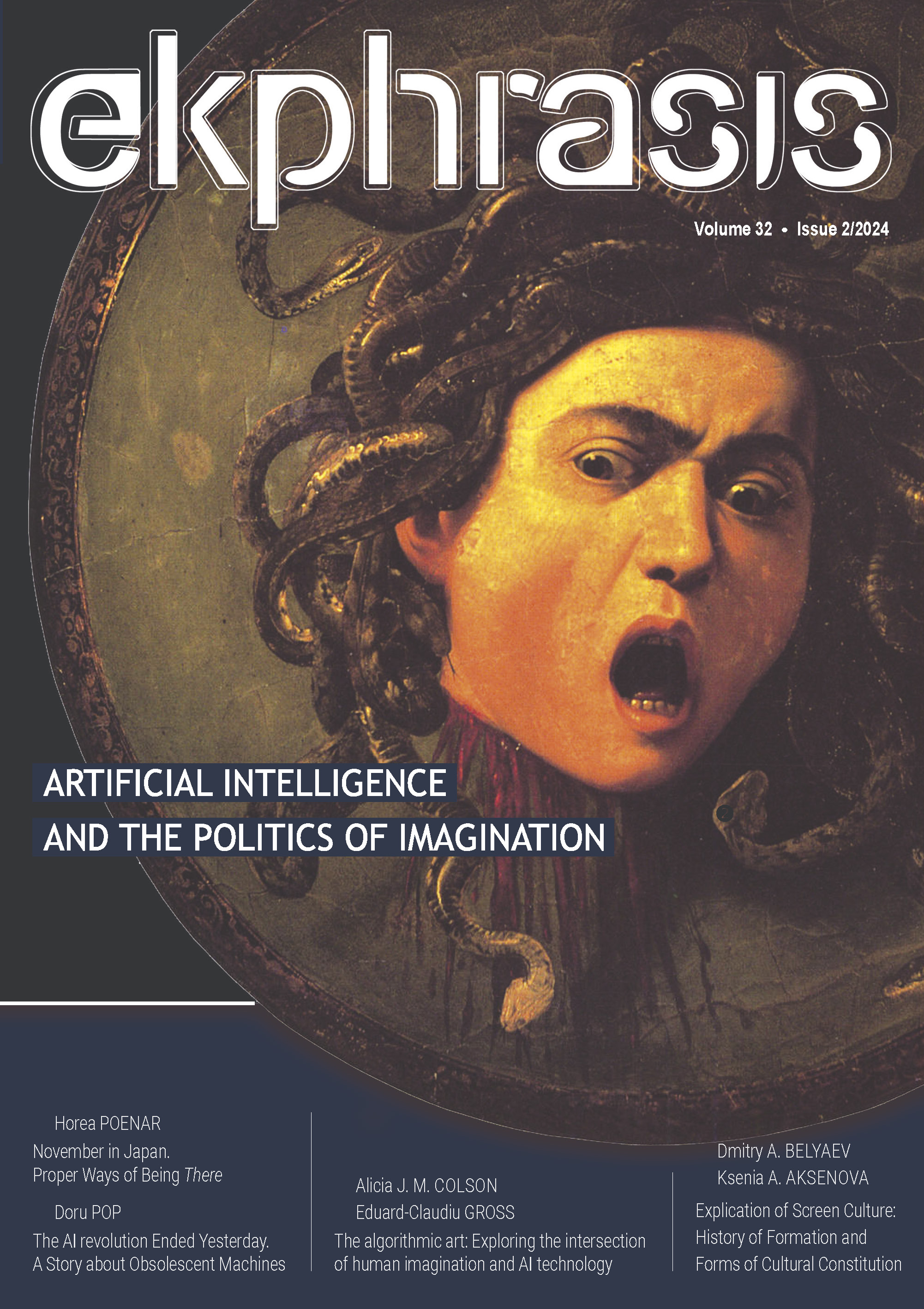
Imagination and the Abyss in the Middle Eastern Novel: Elias Khoury and The Embedded Memory of Silence in Global Networks
Imagination and the Abyss in the Middle Eastern Novel:
Elias Khoury and The Embedded Memory of Silence in Global Networks
Author(s): Călina PărăuSubject(s): Language and Literature Studies, Studies of Literature, Comparative Study of Literature, Other Language Literature
Published by: Universitatea Babeş-Bolyai, Facultatea de Teatru si Televiziune
Keywords: imagination; world-system; displacement; translation; narrative; silence; history; fiction
Summary/Abstract: The present paper aims to investigate world literature’s struggle for finding an imaginary way out of the hegemonic logic of neoliberal capitalism, the standardization of global narratives, and the commodification of local realities. We will delve into the cultural relation between imagination and collective memory in order to investigate how fictionalization negotiates the accessibility of the past, retaining or dismissing unassimilable memories and representations. The paper will draw on the compelling case of Lebanese writer Elias Khoury, who worked with the fragments of the stories he gathered from a Palestinian refugee camp, during the 1948 Arab-Istraeli war, in two of his major novels, Bāb al-Shams (Gate of theSun, 1998) and Awlād al-Ghītū—Ismī Ādam (Children of the Ghetto—My Name is Adam, 2016). What these novels have in common is a fascination with the role of narrative imagination/storytelling within the dynamics of fractured representational relations on the global stage. Thus, I seek to look into the ways in which transnational imagination integrates or translates historical disruption or experiences of displacement. I am interested in the mechanisms employed by these works of fiction that shed light on how the ‘local’ becomes comprehensible through universalizing frames or on how the local functions as a spectre within this trans-cultural imaginary. The general aim is to see whether these contexts in which our relation to the story of the victim is constructed through the prevalence of imagination over memory discourses or historical narratives can foster a sense of international solidarity.
Journal: Ekphrasis. Images, Cinema, Theory, Media
- Issue Year: 32/2024
- Issue No: 2
- Page Range: 132-144
- Page Count: 13
- Language: English
