
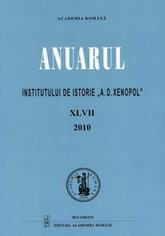
Securitatea colectivă în strategia micilor puteri. Consideraţii pe marginea cazului românesc şi a celui danez
Collective Security in the Strategy of the Small Powers. Views on the Margin of the Romanian and the Danish Case
Author(s): Oana Gabriela LăculiceanuSubject(s): History
Published by: Editura Academiei Române
Keywords: strategy of neutrality; collective security; Denmark’s case; League of Nations
Summary/Abstract: During the interwar period, the collective security represented nearly the unique option of foreign policy for certain European states, in order to secure their national interests. The establishment of the League of Nations who proposed a system of collective security as a peace keeping solution, preoccupied especially the small and medium powers who did not have necessary the force in order to defend themselves in case of an external aggression. Denmark and Romania were among these states, both of them being interested in defending their national and territorial integrity. Therefore their activity inside the League of Nations was an essential element of their foreign policy. In this article we analyze the approach of the two countries as representatives of the small and medium powers of the principles promoted by the League of Nations, especially that of collective security. We believe that the way in which states like Denmark and Romania applied these principles had an essential impact on the efficiency and the authority of the League. This fact makes more interesting revealing of the factors which determined their policy at Geneva. The way the collective security principle was applied varied according to the different countries` interests and international position. In their support for the use of the instruments of collective security, Denmark and Romania resorted to different strategies according the international context. In some cases they chose a determined and tuff strategy in order to defend peace and their personal values as in the case of the italo-ethiopian conflict. Other times they needed a strategy of concessions in order to keep their territorial integrity. The strategy of neutrality was also useful for the same goal, as was Denmark’s case after the failure of the collective security starting from 1935.
Journal: Anuarul Institutului de Istorie »A.D. Xenopol« - Iaşi
- Issue Year: XLVII/2010
- Issue No: 47
- Page Range: 215-238
- Page Count: 24
- Language: Romanian
